
The past week has seen a significant escalation in geopolitical tension with US and Israeli military action against Iran. For those with ties to the region, the situation feels immediate and worrying, and even for others, headlines and market reactions are hard to ignore.
It’s now been over a week since the US and Israel began military action against Iran. For many people with family or personal connections to the region, this situation feels particularly close to home. Even if you’re not directly affected, the headlines alone can feel overwhelming.
Hopes of a quick breakthrough didn’t materialise over the weekend. Both sides appear prepared to continue, and while the conflict hasn’t widened dramatically, one significant consequence is the halt in energy shipments through the Strait of Hormuz. As things stand, it’s difficult to see an immediate path back to normal.
As of Monday, (9 March), Brent crude oil moved above $100 per barrel. In fact, prices hit $120 at the start then fell to $90 at the end of the day. Equity markets have opened lower once again. Asian markets – especially Japan and South Korea – have been hit hardest due to their reliance on imported oil. Which is all to say, we can see how quickly things are moving, and the nervousness from investors.
Concerns about global growth are already circulating. The International Energy Agency is discussing releasing emergency oil reserves, and the media is full of comparisons with the 1970s. It’s easy to get swept along by the noise.
But it’s important to remember that markets can turn quickly. A ceasefire, improved access through the strait, or a coordinated release of reserves could stabilise things faster than many expect. Volatility is likely to continue this week, but fear-based reactions rarely lead to good investment decisions.
What we’re seeing in markets
Periods like this reinforce why diversification matters. The most effective way to manage volatility is through a well‑constructed long-term strategy, not rapid changes when markets are unsettled.
At Lync, our independence means we work with a range of investment providers. This gives us flexibility to choose what we consider to be the strongest solutions available. We’re monitoring how underlying investment managers are positioning portfolios and assessing potential opportunities that may emerge if markets fall far enough for valuations to become attractive.
US equities have been relatively resilient. The US is less dependent on Middle Eastern energy exports, and sterling investors have benefited from a stronger US dollar, which has helped soften some of the equity market declines.
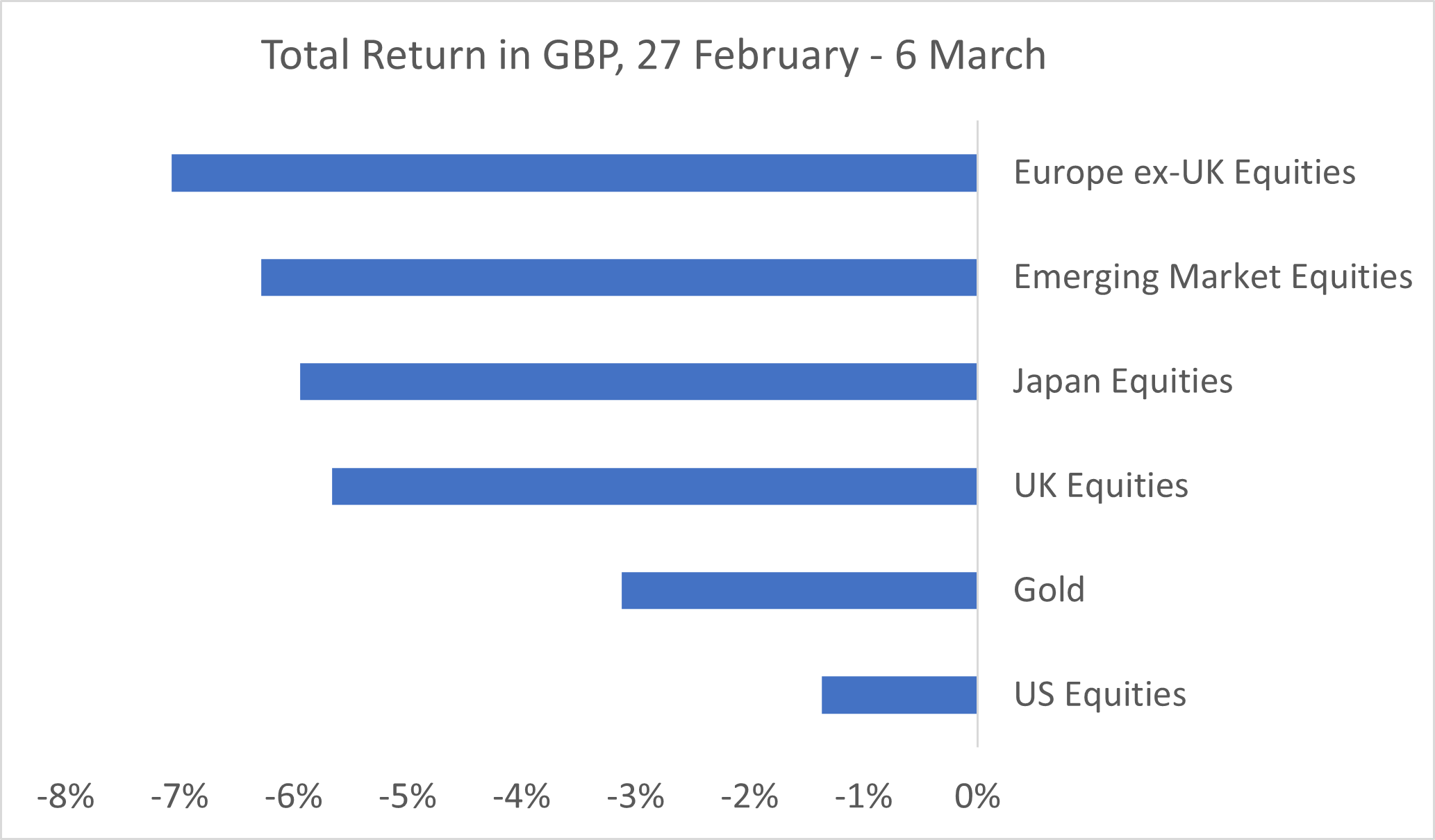
Source: FactSet. Total return in GBP for major equity indices.
The risk of higher costs
Geopolitical shocks affect markets when they’re significant enough to influence economic growth, inflation or interest rates. A sustained period of higher energy costs could feed through into all three.
We’ve already seen early signs of this: some UK energy firms have withdrawn fixed‑price tariffs, and several banks have increased mortgage rates. These rates generally follow UK Gilt yields, which rose last week as investors priced in the possibility of prolonged inflationary pressure.
Oil and natural gas pricing adds another layer. There have been sharp rises in near‑term contracts (for March and April), but smaller moves in contracts for late 2026. This suggests that, collectively, the market expects the disruption to be temporary.
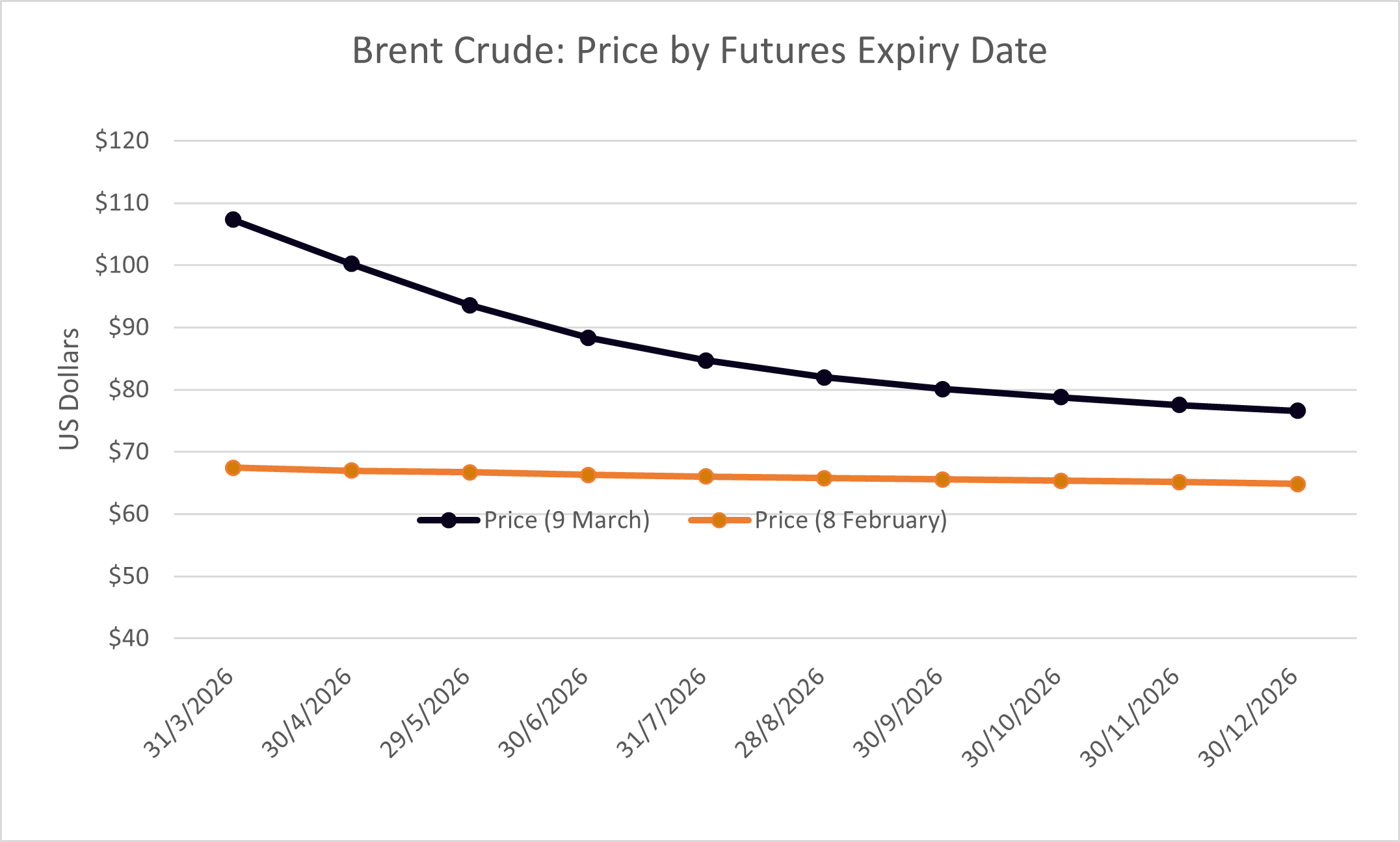
Source: FactSet. Prices as at 8:30am GMT, 9 March 2026.
What might lead to resolution?
Any end to the conflict will require cooperation – and it’s more complicated than the tariff‑related market swings of 2025. In that situation, decisions rested largely with the US administration. With this conflict, even a halt to US military action wouldn’t immediately restore safe passage for oil and gas shipments.
How long the conflict lasts will depend on how willing and able the parties are to continue fighting. Current signals suggest the conflict may be shorter-lived, but nothing is guaranteed. Domestic political pressures in the US, and the extent of Iran’s military capacity, will both play a role. Blocking the Strait of Hormuz is unlikely to be sustainable for Iran over the long term.
Our view for investors
- Geopolitical events like this are unsettling, but the long-term principles still hold:
- Markets can recover before the headlines improve
- Missing those turning points can have a meaningful impact on long-term returns
- Staying invested within a diversified strategy remains the most effective approach for most investors
- If you have questions or would like to talk through your portfolio, your Lync adviser is here to help.
Important information
This communication is for general information purposes only and does not constitute advice on investments, legal matters, taxation or any other matters. Past performance is not a guide to future returns.